Pargo Tool
The Russian Hand Tools Market: Dynamic Shifts & Industrial Demands
A comprehensive macroeconomic analysis of the hardware sector, localization forces, and supply chain adaptation.
1. Structural Shifts and the "Import Substitution" Wave
The Russian hand tools market is experiencing a profound structural reconfiguration. Following the exit of premium European and North American tool brands, Russian industrial enterprises, construction conglomerates, and automotive repair chains have faced the urgent challenge of finding reliable partners capable of providing equivalent quality, precision, and durability. Domestic distributors are actively seeking direct manufacturers in China who can fill the vacuum left by Western brands by supplying high-performance Chrome Vanadium (Cr-V) and S2 steel products under customized private labels.
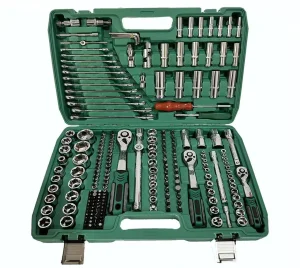
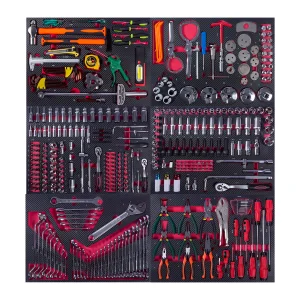
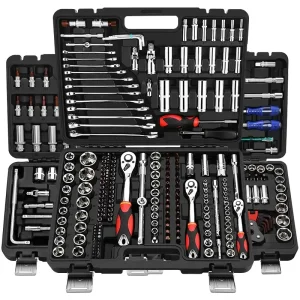
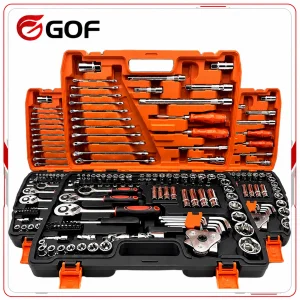
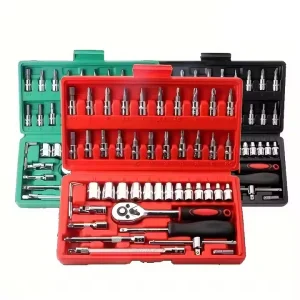
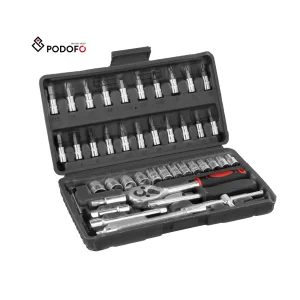
As a result, professional-grade tools featuring strict compliance with European DIN and Russian GOST metallurgical standards have seen unprecedented demand. At Zhejiang Pargo Tool Co., Ltd., we have stepped in as a premier strategic OEM partner, integrating state-of-the-art heat-treatment technologies and raw material sorting to supply high-reliability mechanics sets to the Moscow, St. Petersburg, and Ural industrial corridors.
Market Intelligence Summary
- ✔ Regional Demands: Extreme cold-resistance is required for tools operated in Ural, Siberian, and Far Eastern Federal Districts (down to -40°C).
- ✔ Automotive Shift: Rapid expansion of Chinese commercial vehicle fleets (KAMAZ, Shacman, FAW) in Russia requires specialized metric impact sockets.
- ✔ Regulatory Framework: Essential compliance with EAC (Eurasian Conformity) standards and customs-cleared logistics routes.
2. Climatic & Structural Challenges: Designing for Siberian Winters
In Russia, hand tools are subjected to environments that exceed typical operating limits. In regions such as Novosibirsk, Krasnoyarsk, and Yakutsk, hand tools must function in temperatures falling below freezing. Standard carbon steel tools become extremely brittle under these conditions, leading to shattering, structural micro-cracks, and safety hazards.
To address this, Pargo utilizes specialized chromium-vanadium alloy formulas enriched with manganese and molybdenum. This chemical composition enhances the impact strength of our wrenches, sockets, and pliers, ensuring they retain their structural elasticity and torque capacity even at sub-zero temperatures. Furthermore, our dual-component TPR (Thermoplastic Rubber) handles are tested against chemical solvents, oils, and low-temperature contraction, preventing the cracking and detachment common in cheaper PVC handles.